Build Club Workshop
Build Club Workshop
Build Club Workshop
Student-Led Innovation Hub

Build Club Learning is Play!

Play • Have Fun • Build • Learn

Let's Go!

Build Club – Nurturing India’s Next Generation Tech Innovators

India produces a vast pool of young engineers every year; unfortunately, they are trained very unevenly. But their potential is vast. If one inspires them, one sees a different side of them — bright, curious minds with the potential to build world-class products and capable of putting in very hard work. This talent isn’t limited to a handful of premier institutes; it is spread across the entire country. What they often need is the right environment, the right push, and a different kind of nurturing to help them grow into strong product thinkers and builders.

Build Club is created with this purpose in mind.

What is Build Club?

Student-Run Community

Completely student owned. Faculty involvement is limited to just overseeing safety and security of students. Institutes provides basic infrastructure and minimal funding. Open 24x7 including weekends for walk-in, build & learn.

Inclusive Environment

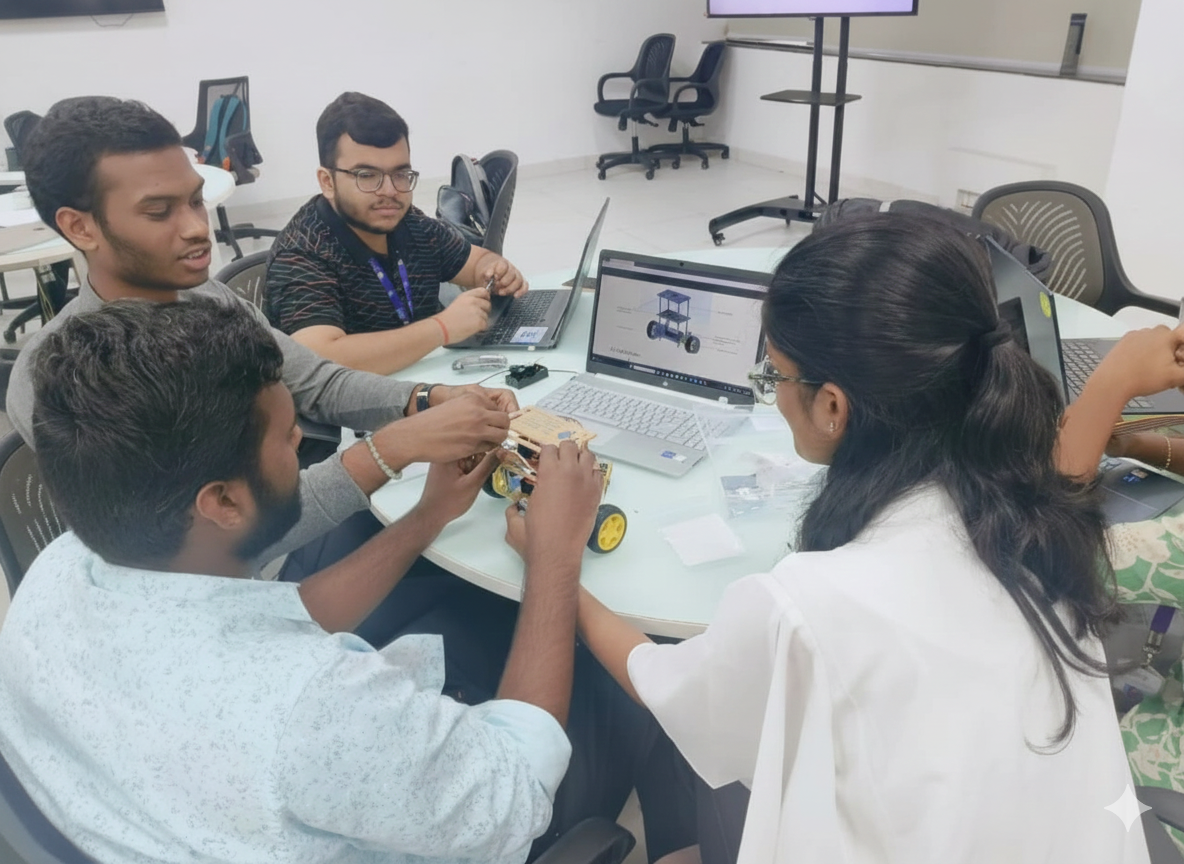
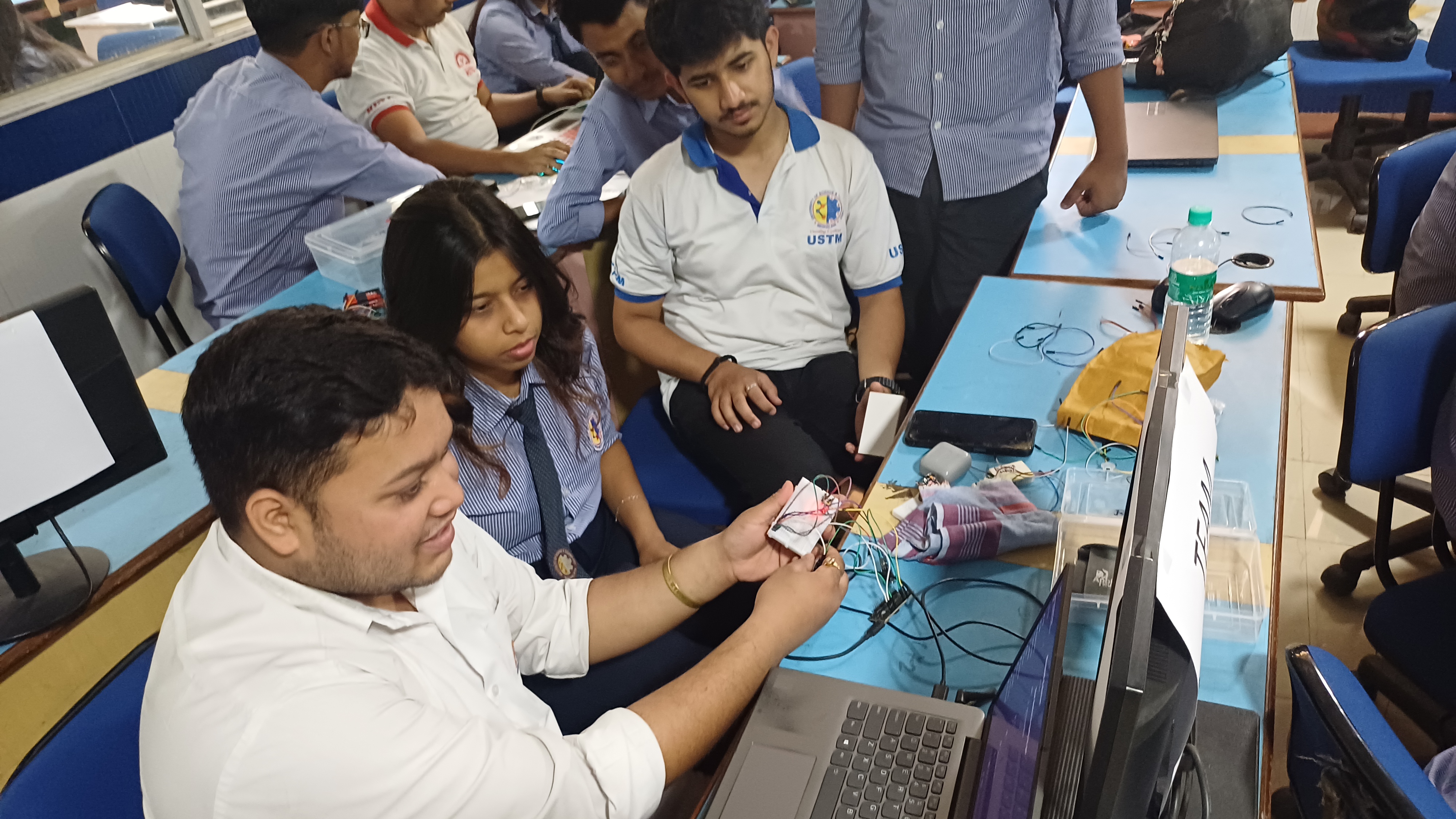
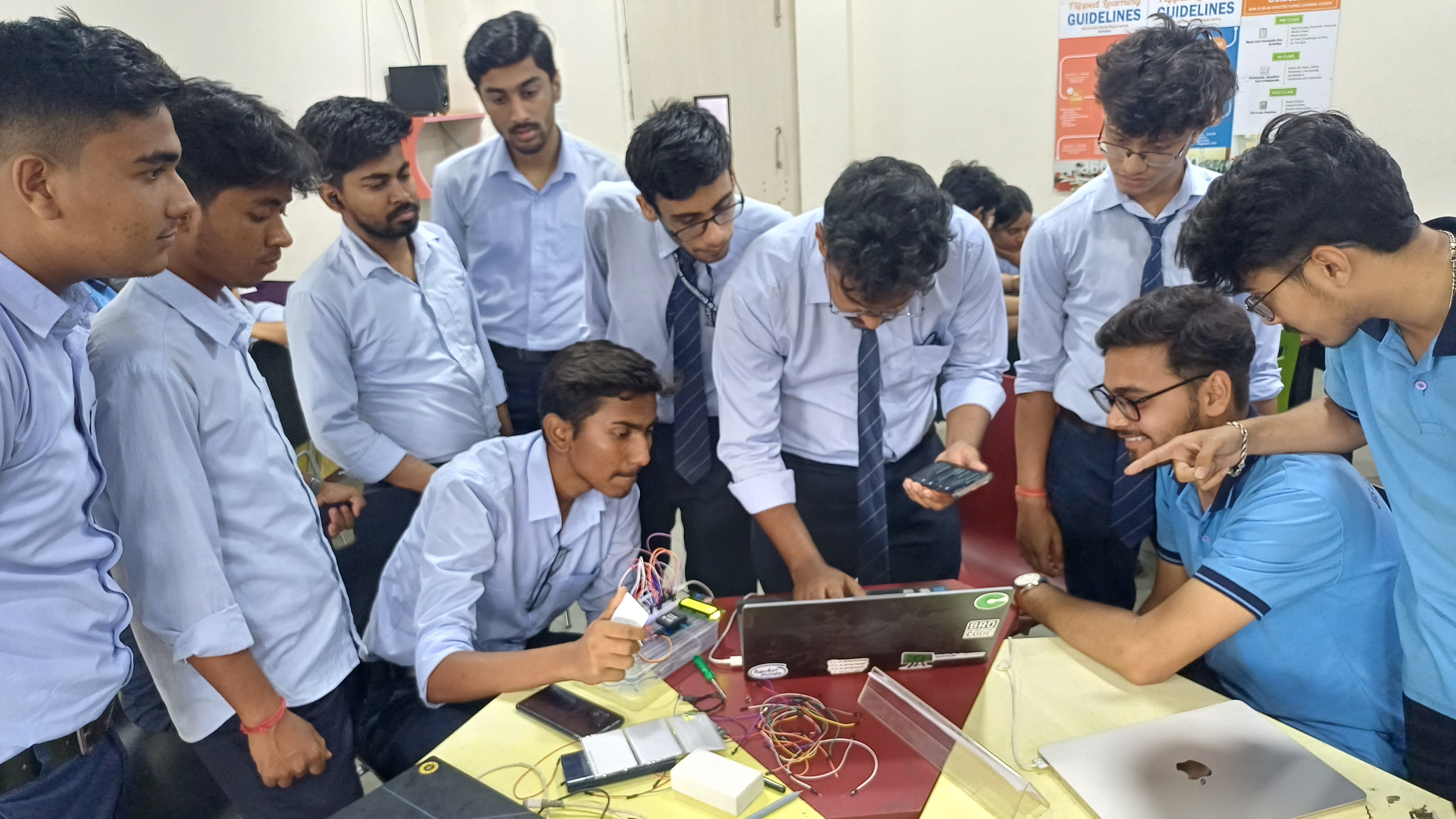
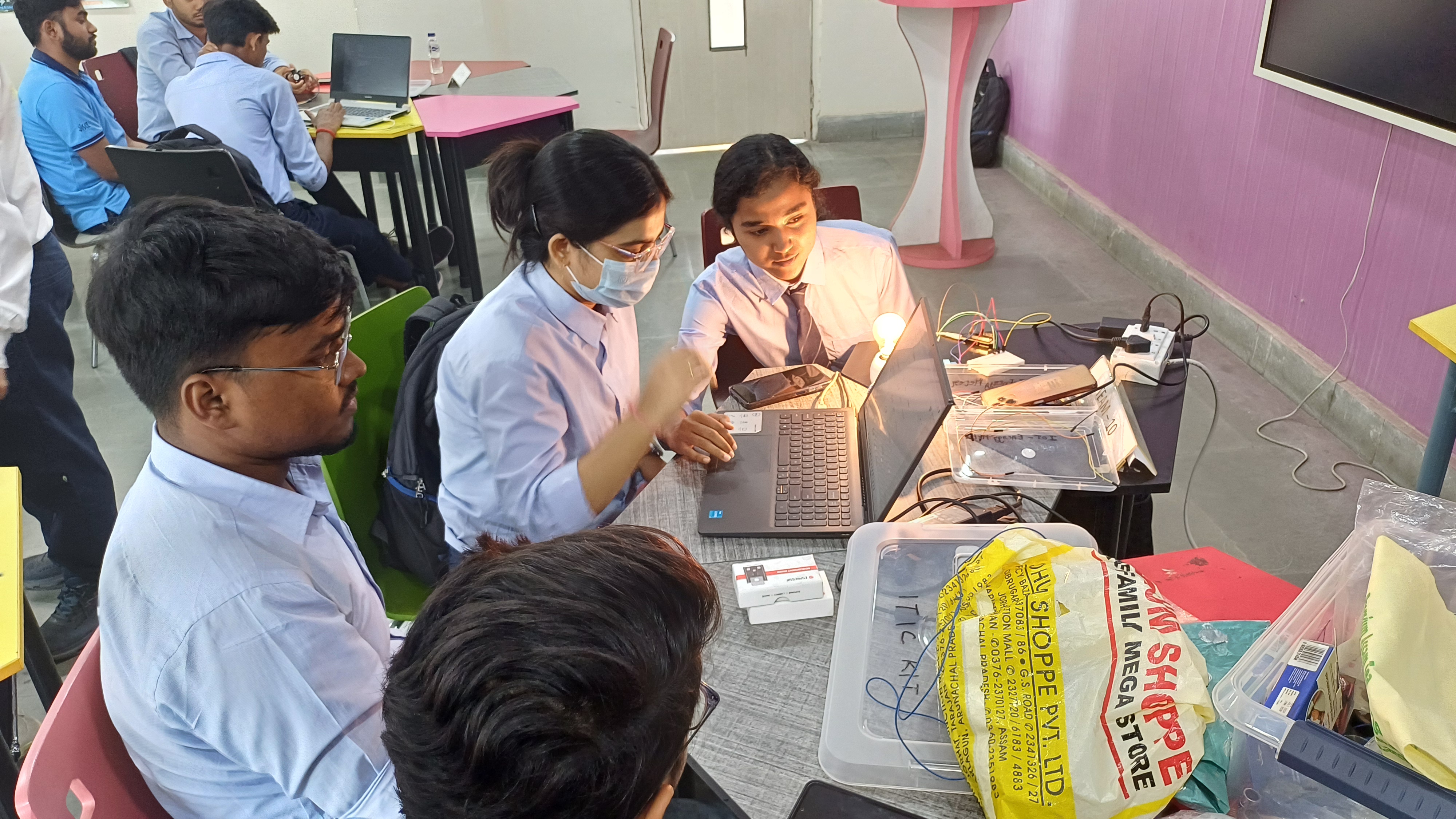
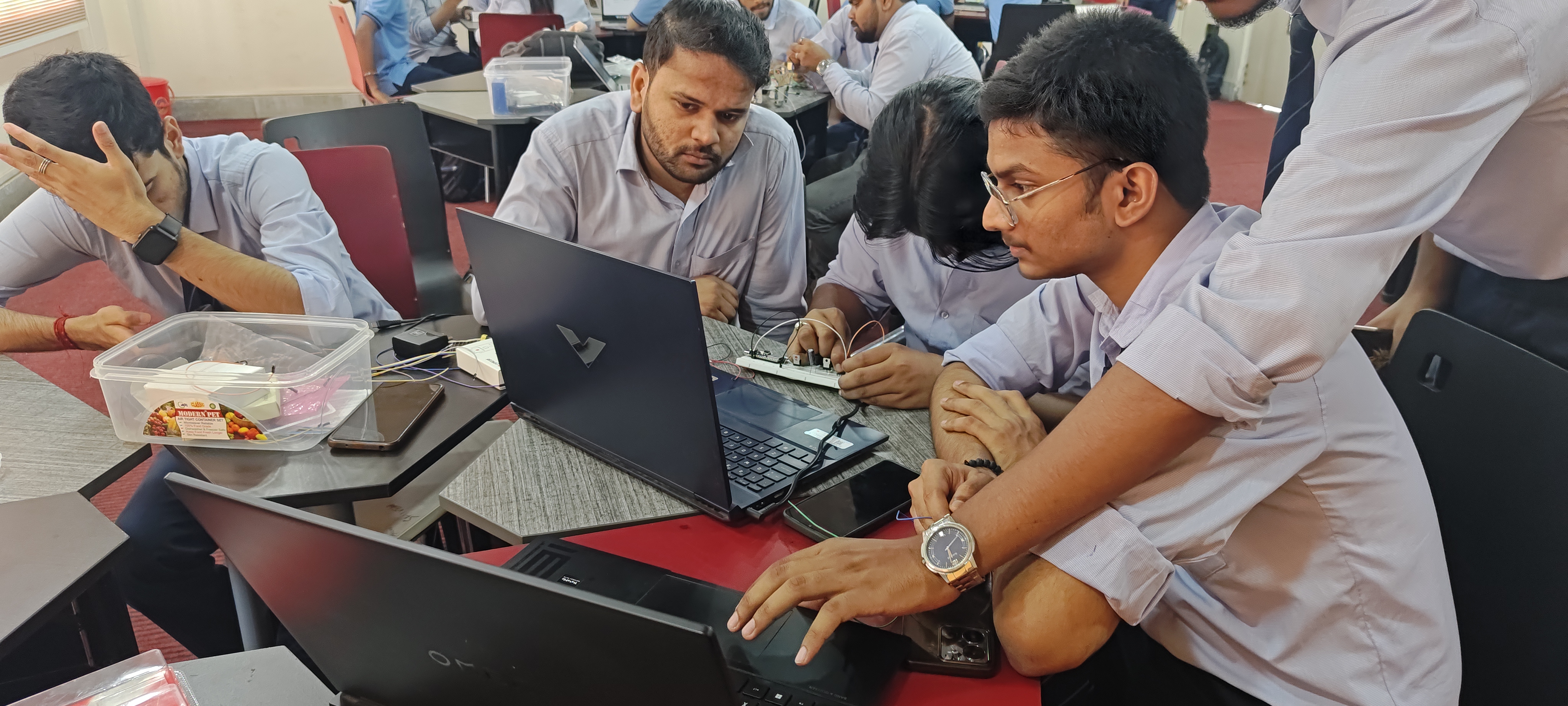
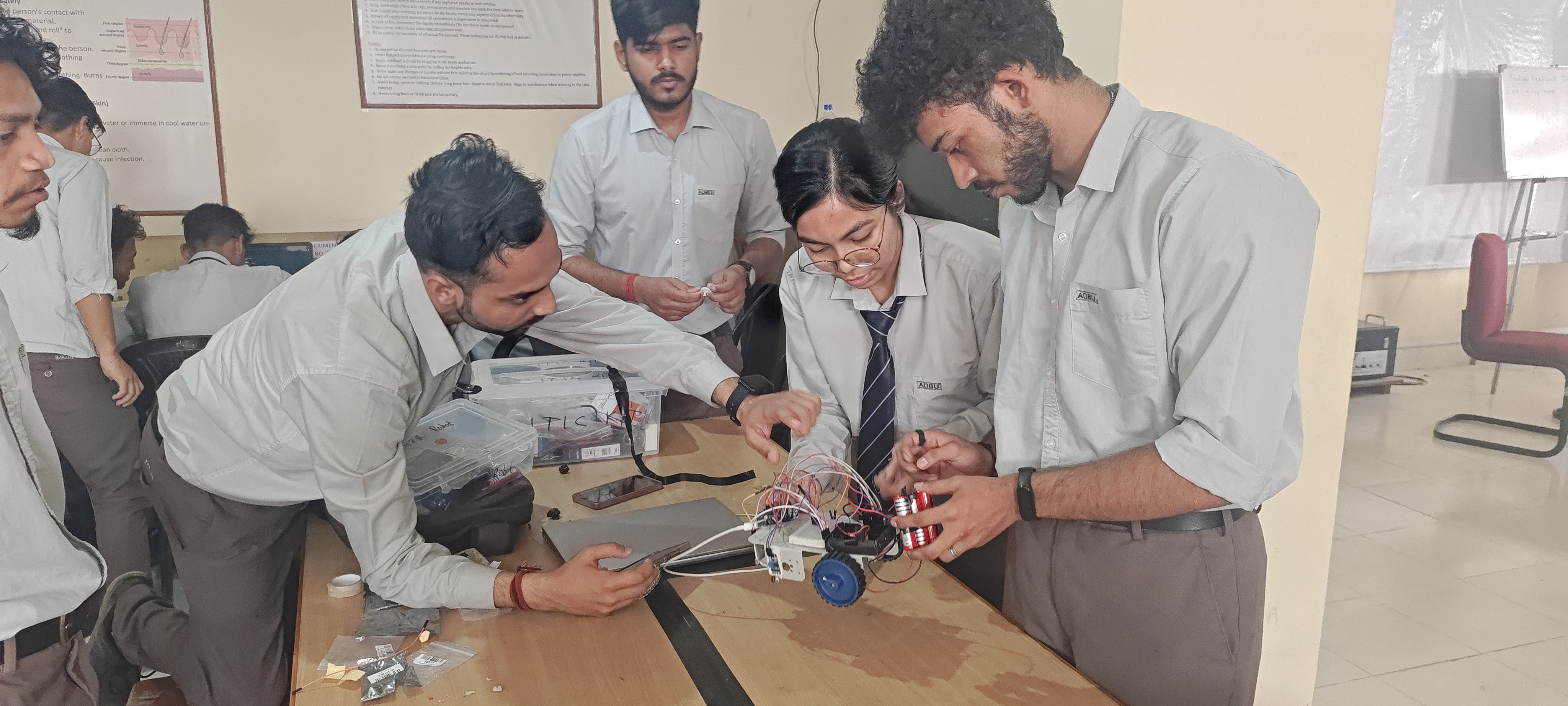
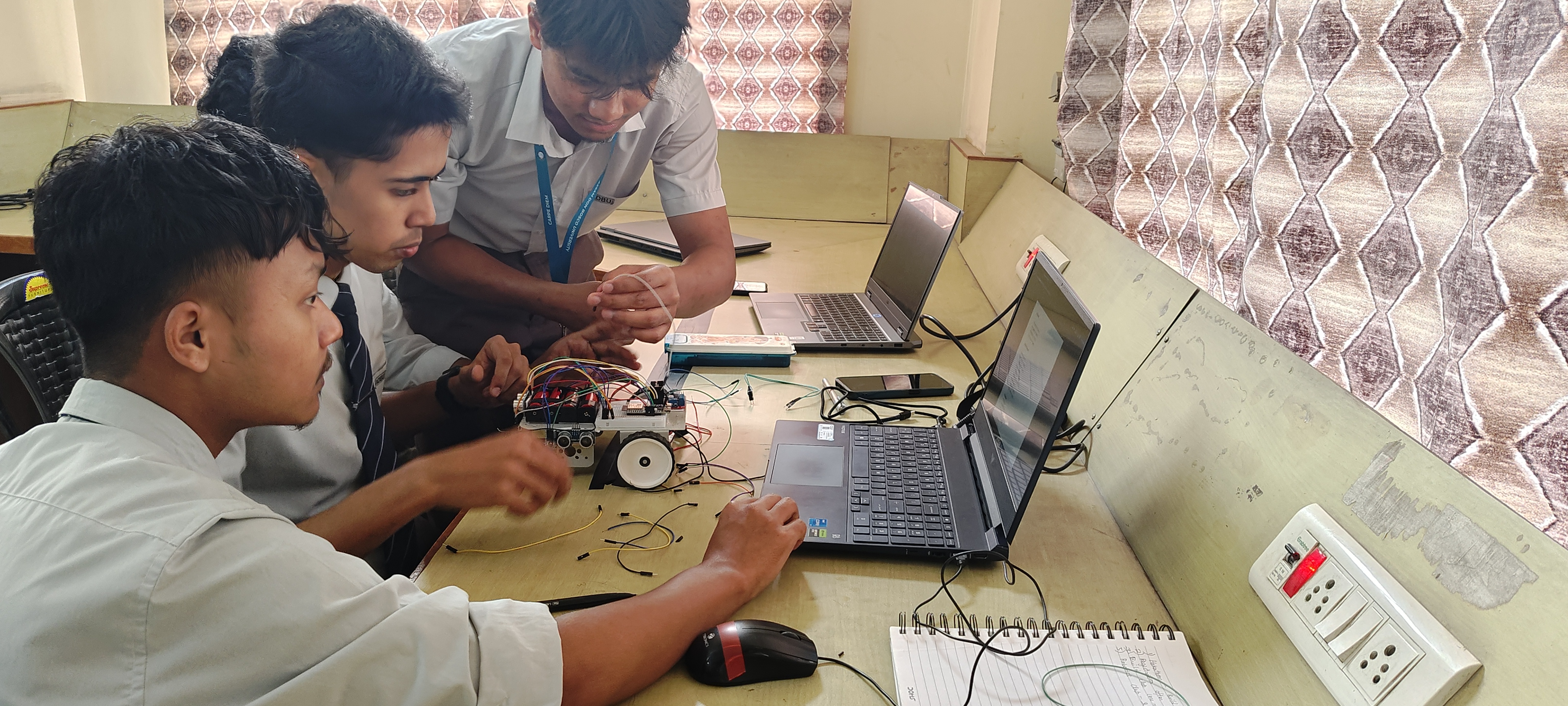
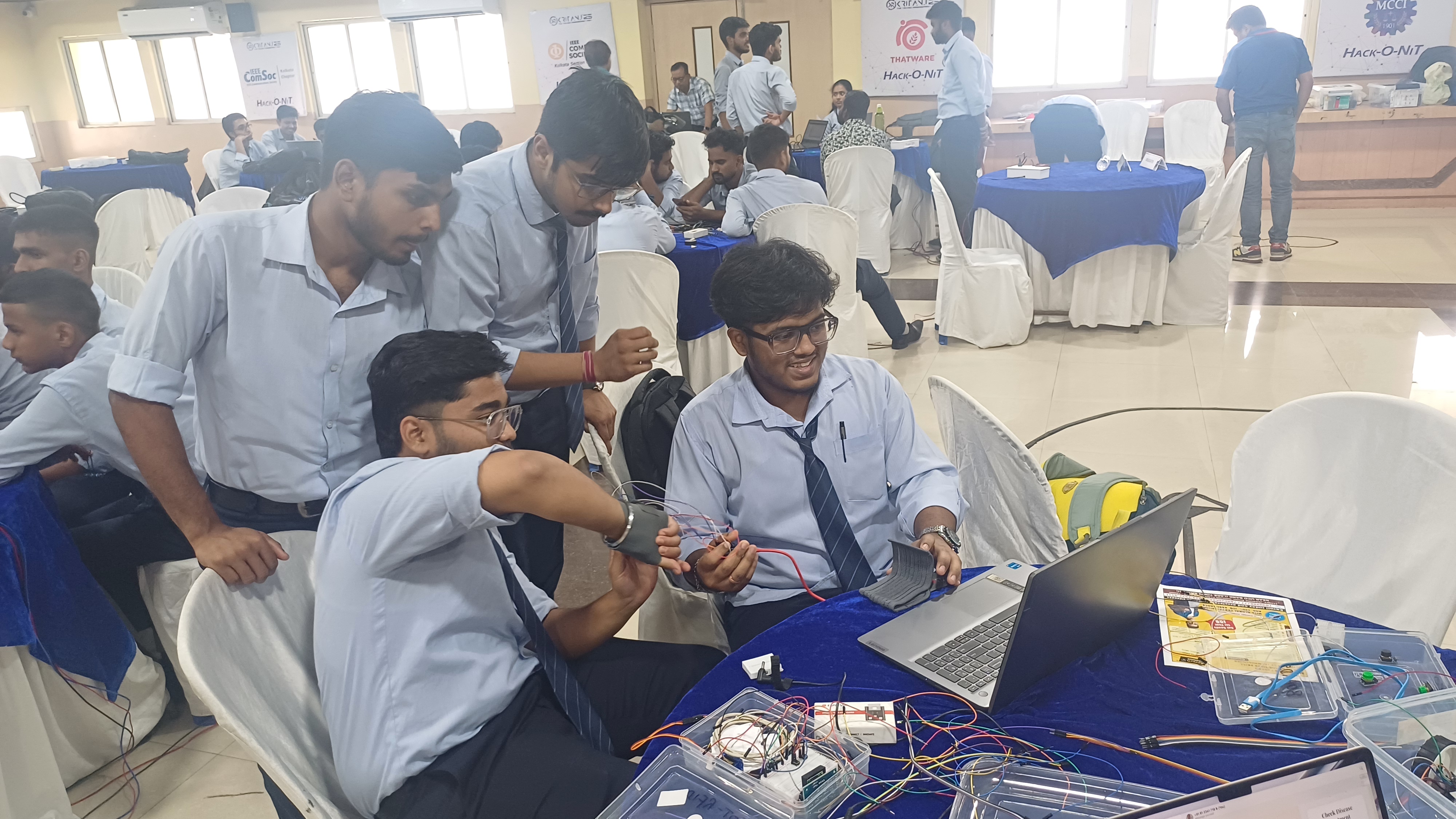
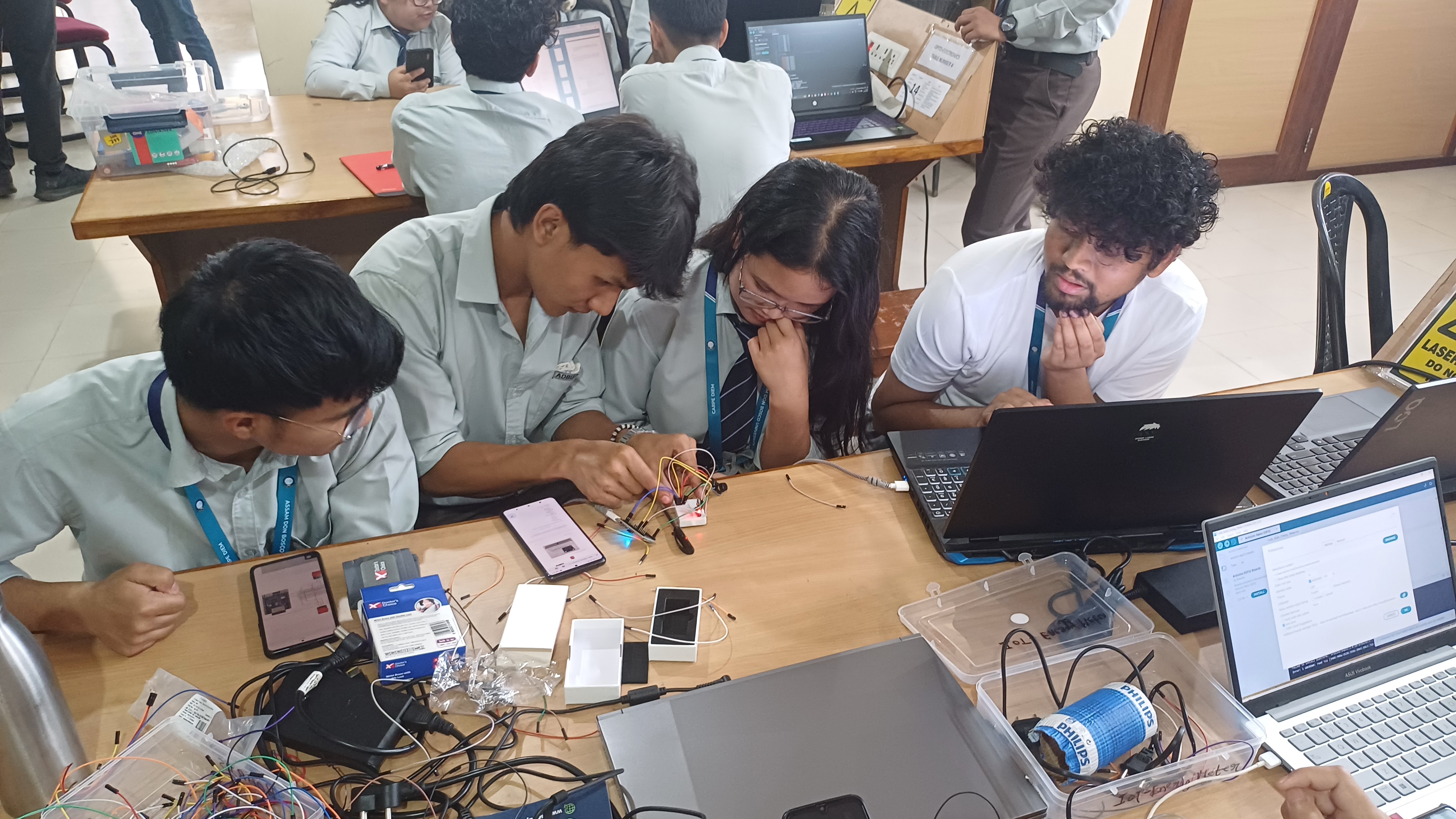
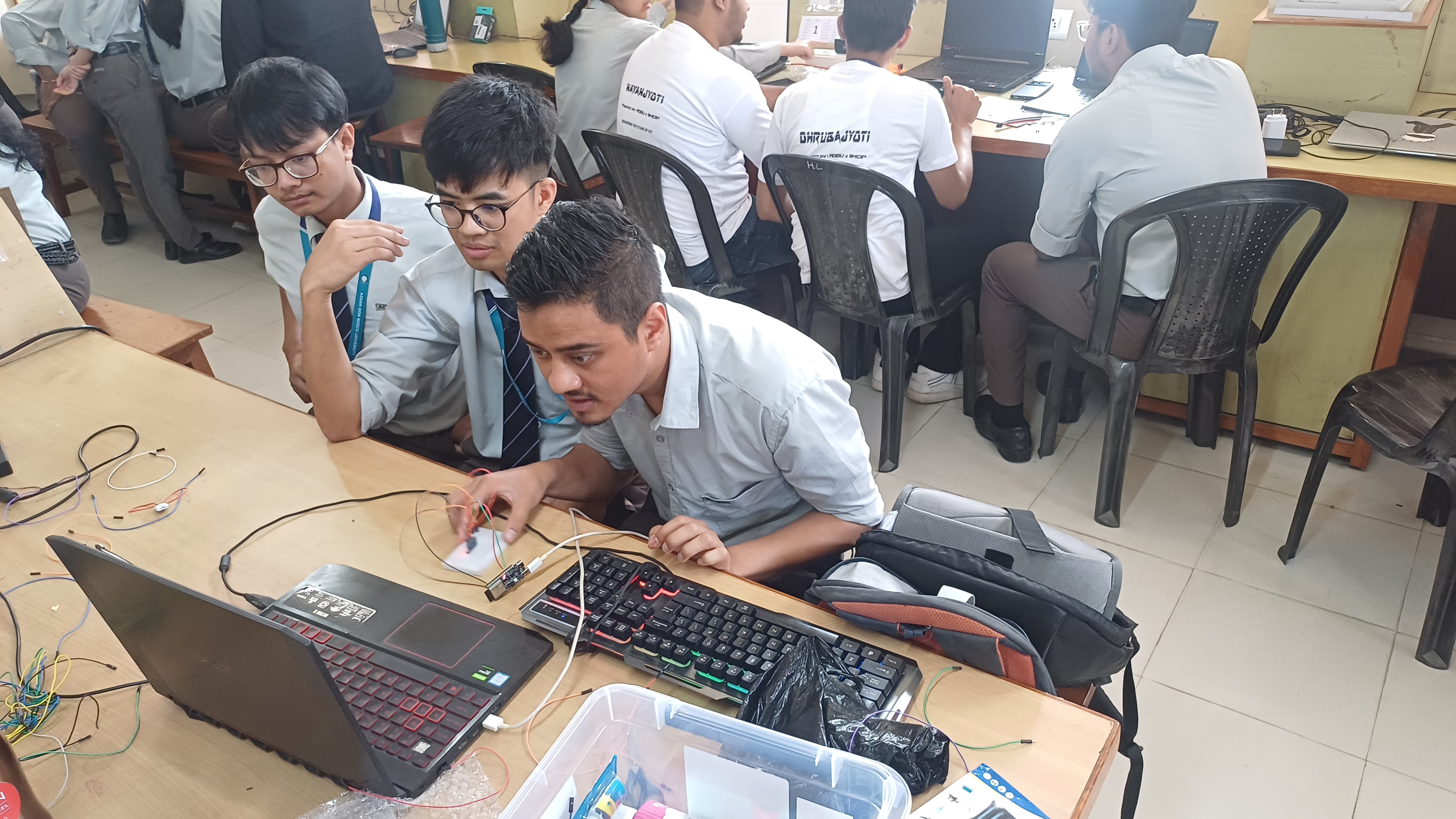
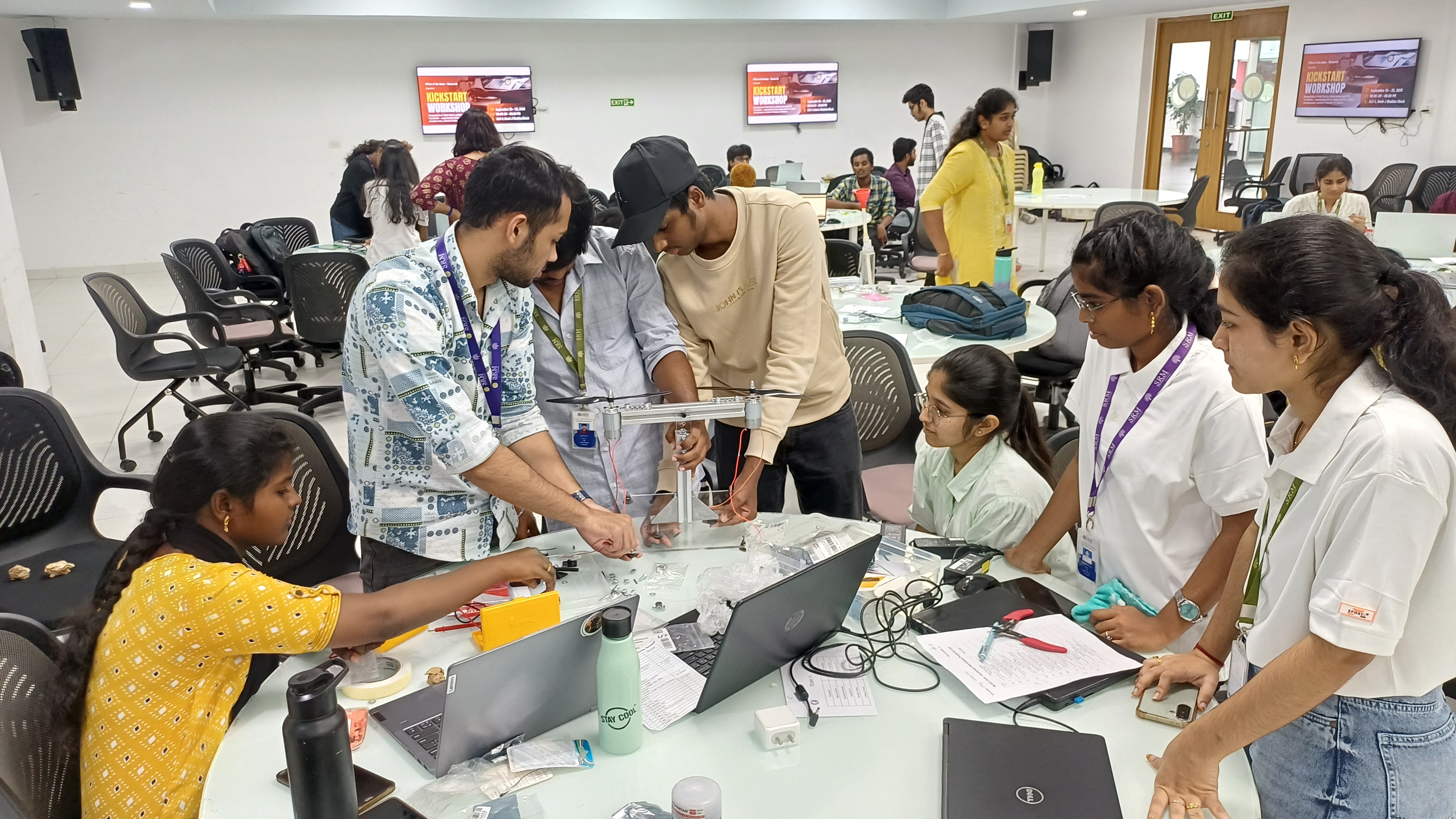
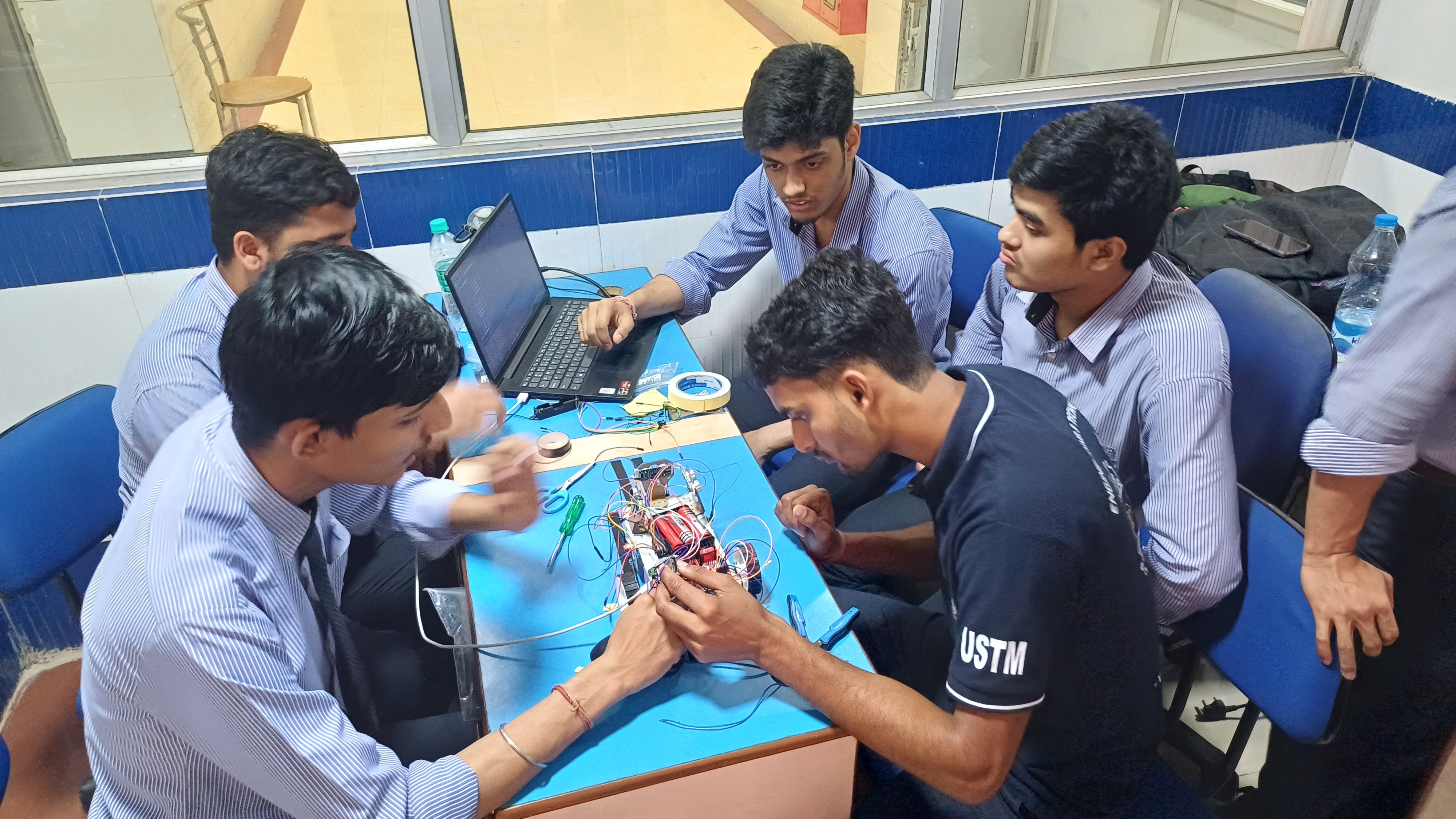
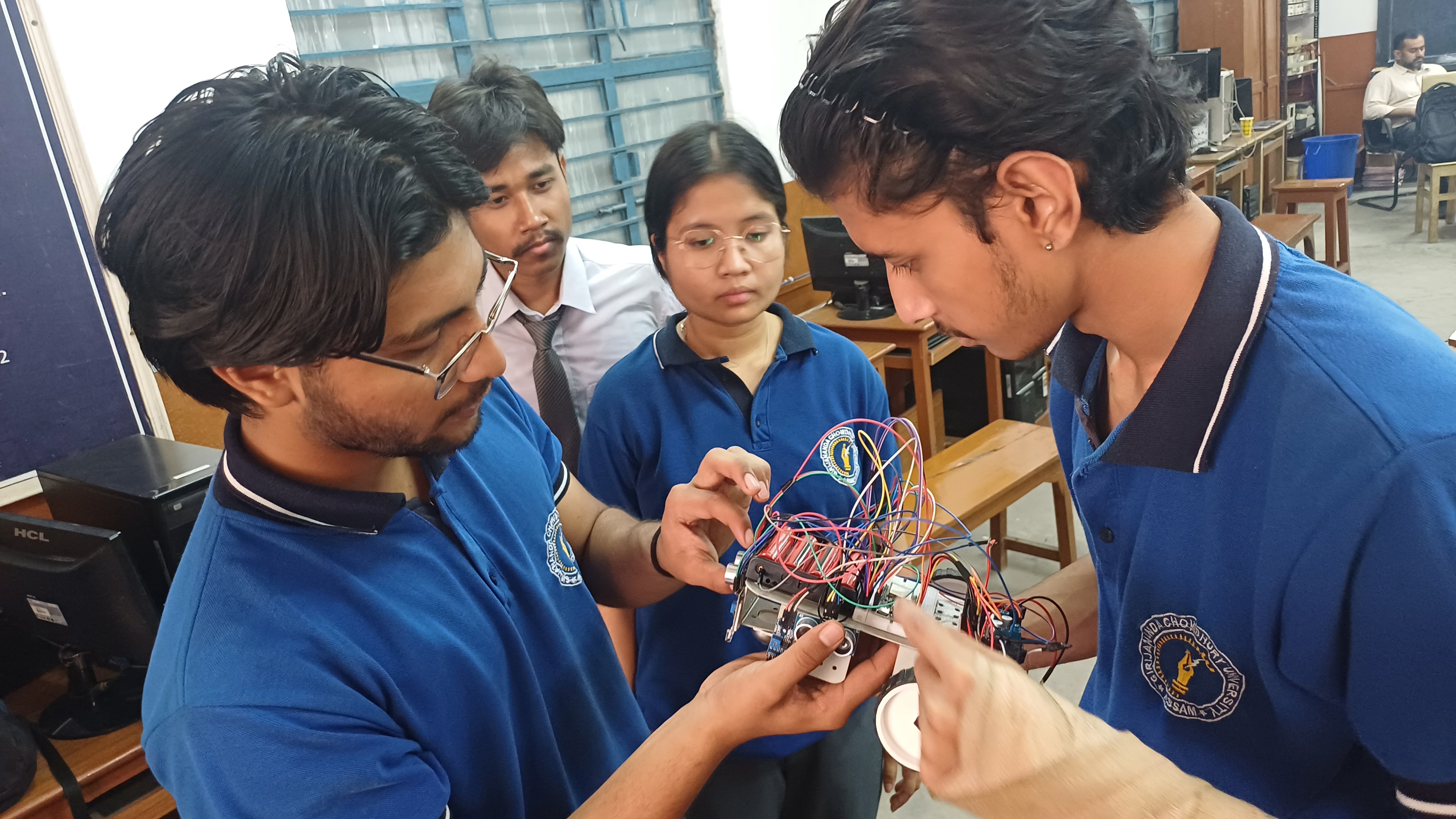
At the Build Club, learning is a collective activity. Students from multi-disciplinary backgrounds, mixed gender, different academic year and performance come together to build products, develop prototypes, explore new ideas and simply have fun, while they build. Students learn from each other and build together.

Learn by Doing

At the heart of Build Club is a simple belief: learning should feel joyful, just like a child playing with LEGO—curious, hands-on and endlessly imaginative. The Build Club is where students get to PLAY, have FUN, BUILD and LEARN.

Voluntary Participation

All activities of build club are fully voluntary and not an extension of academic curriculum.

The Build Club Structure

Part 1: Start Build on Day One

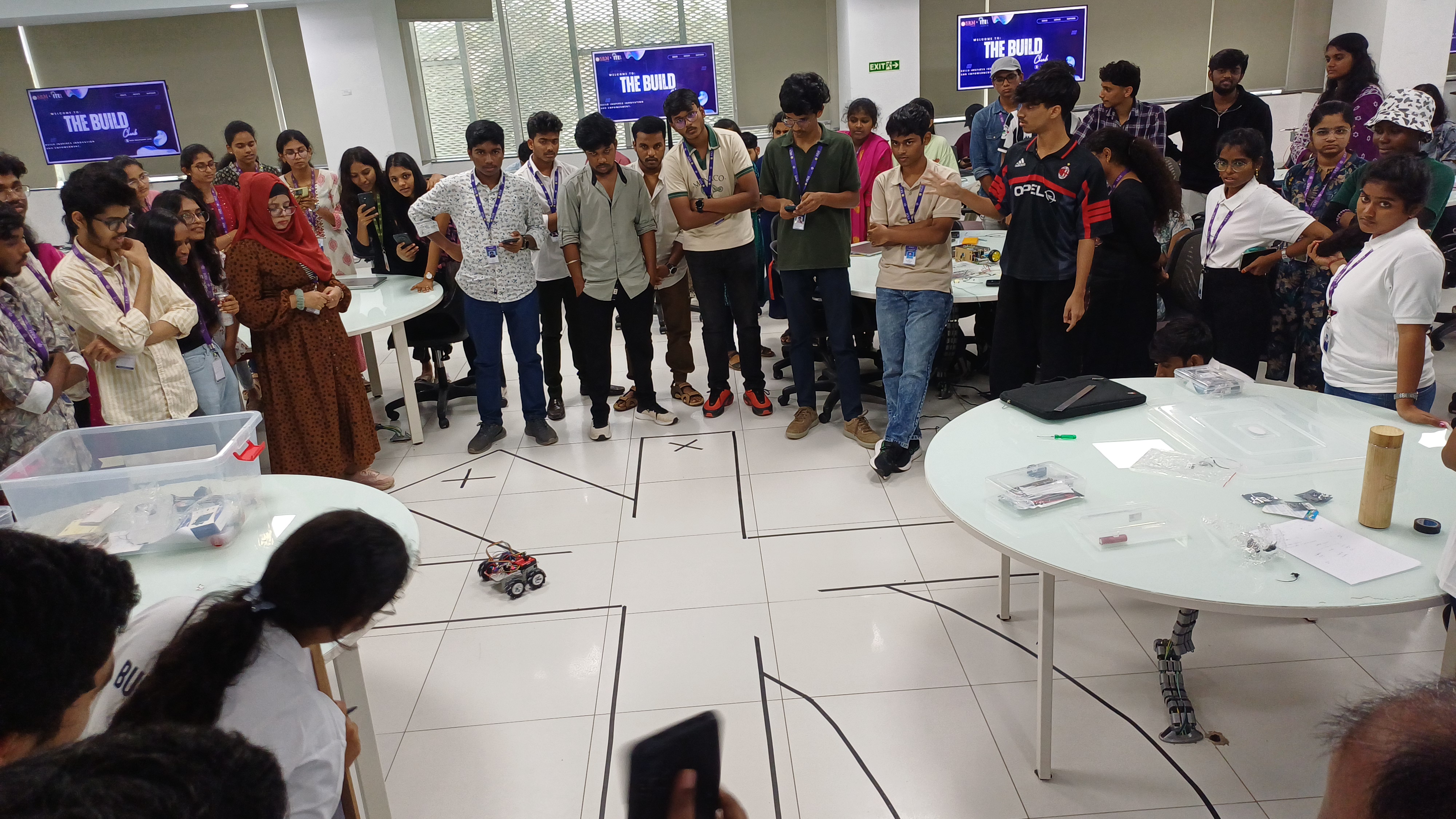
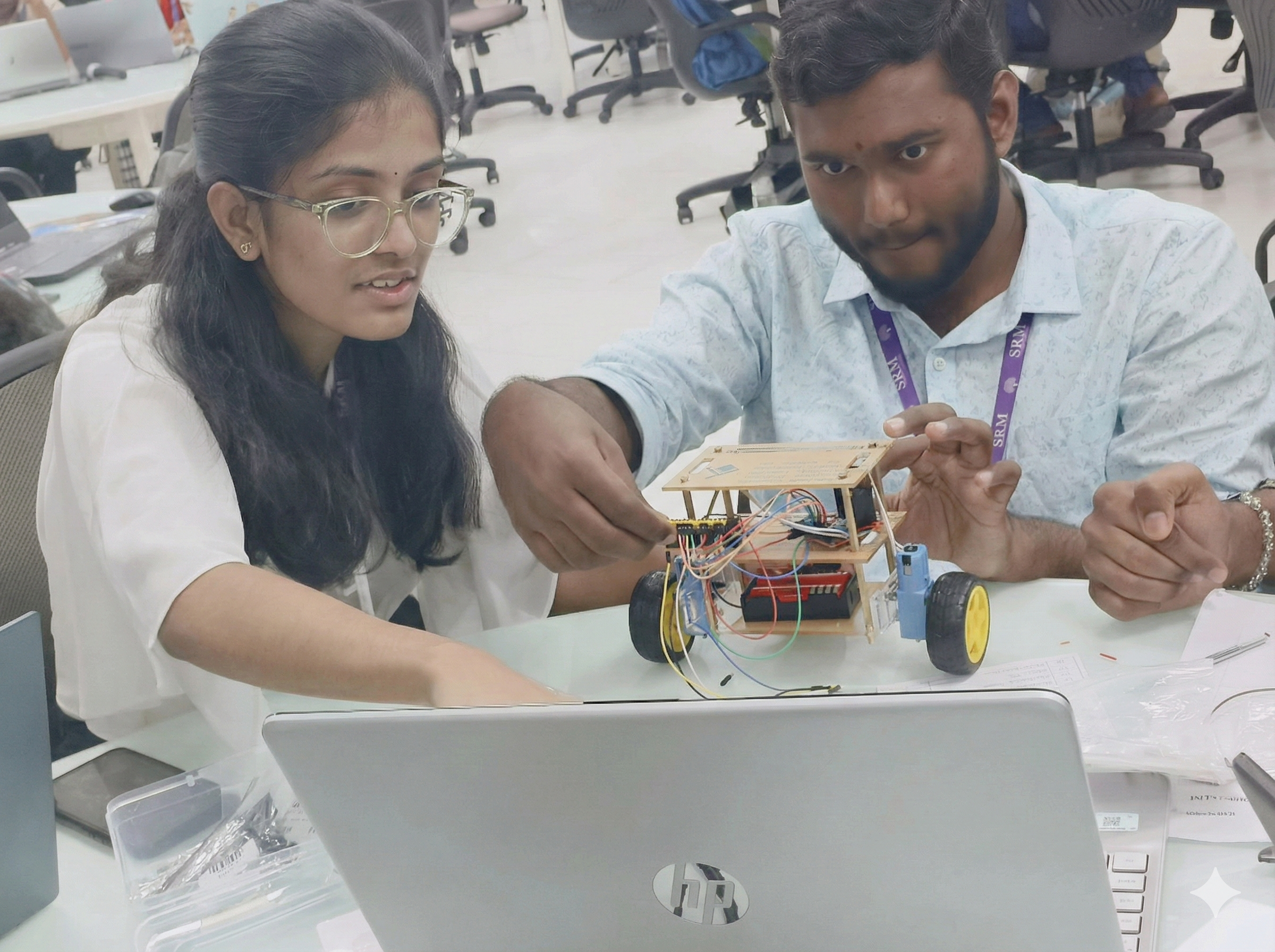
Students kickstart their build journey with simple build projects that they can tinker & play with. These are predominantly microcontroller-based projects which can be completed in a short span of time. Students assemble the components given to them, upload their code, and experience the thrill of watching their creations come alive—whether it’s a line-tracing robot following a path, an autonomous robot solving a maze, or a bot they can control from their phone. While these projects are exciting to build, they also help students naturally learn core concepts like PWM control, PID control, embedded programming, and IoT. Most importantly, these hands-on successes give them a strong confidence boost that they can build real systems.

The Build Club is established across multiple colleges, and the students who wish to be part of it are onboarded onto the Build Club Discord community, where they can collaborate, build, learn from other colleges and stay connected. It serves as a shared space to showcase their projects and engage in ongoing conversations about building and experimenting. The build projects aren’t limited just to electronics and IoT but also extend to mechanical and software builds.

Simple Build Projects
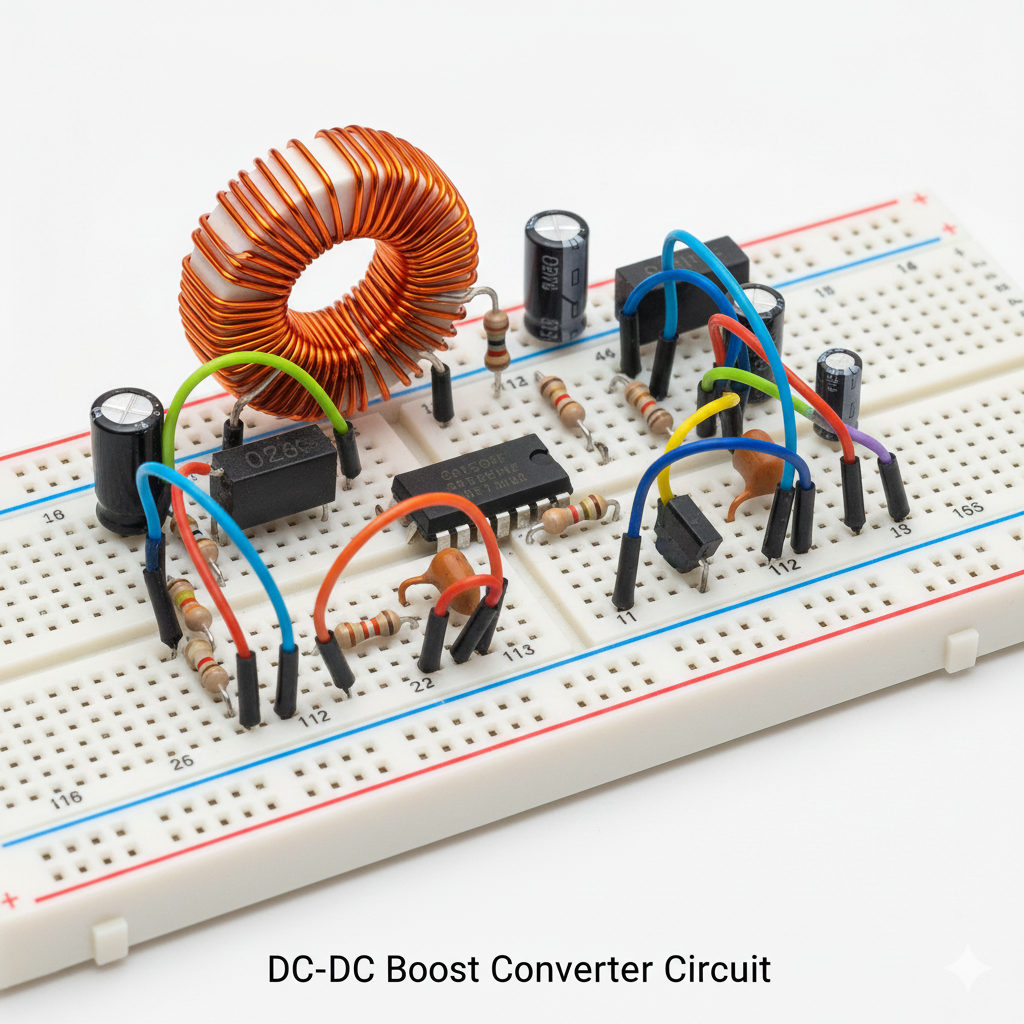
DC-DC Boost Converter

Dc-Dc Boost & Buck Converters

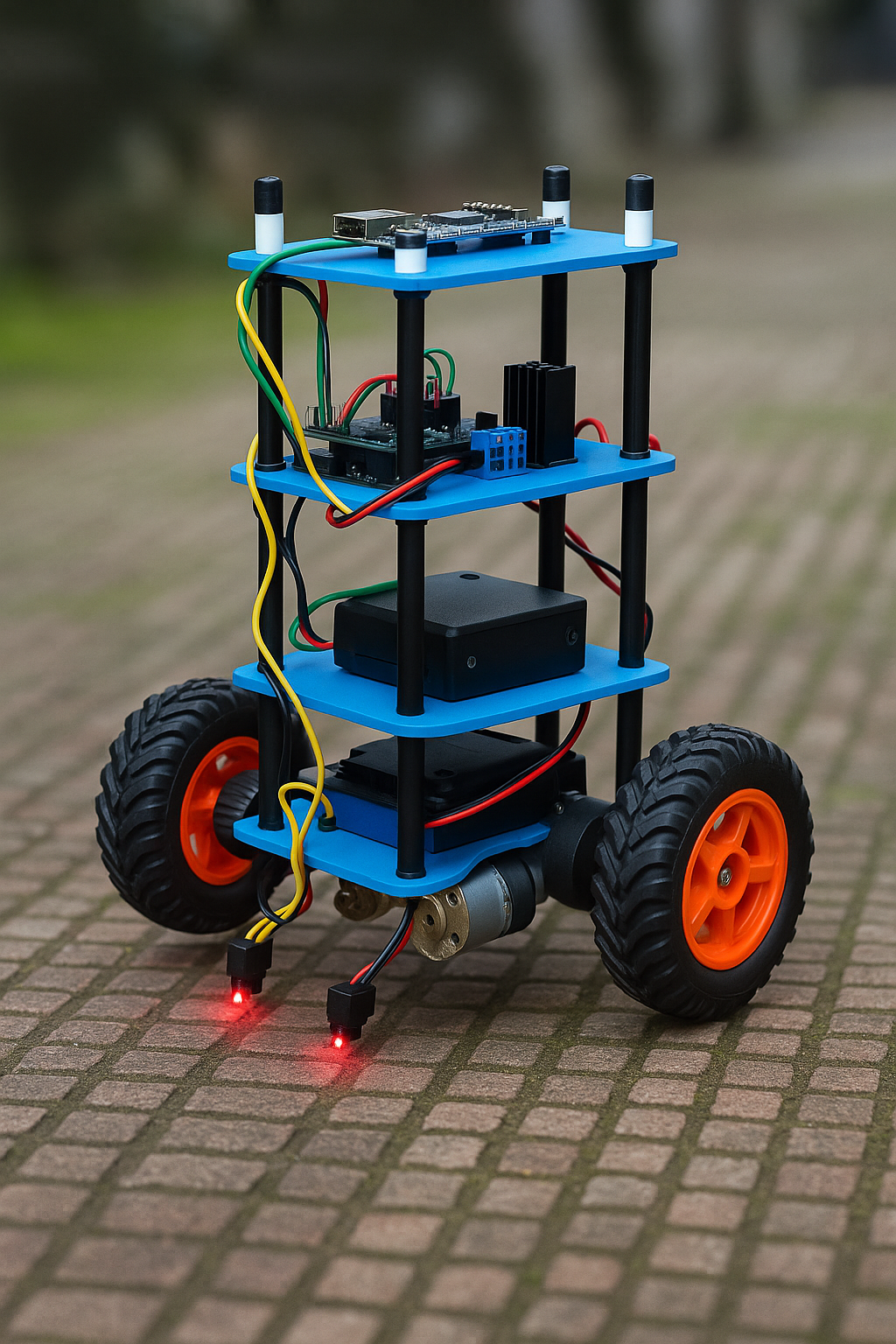
Self Balancing Robot
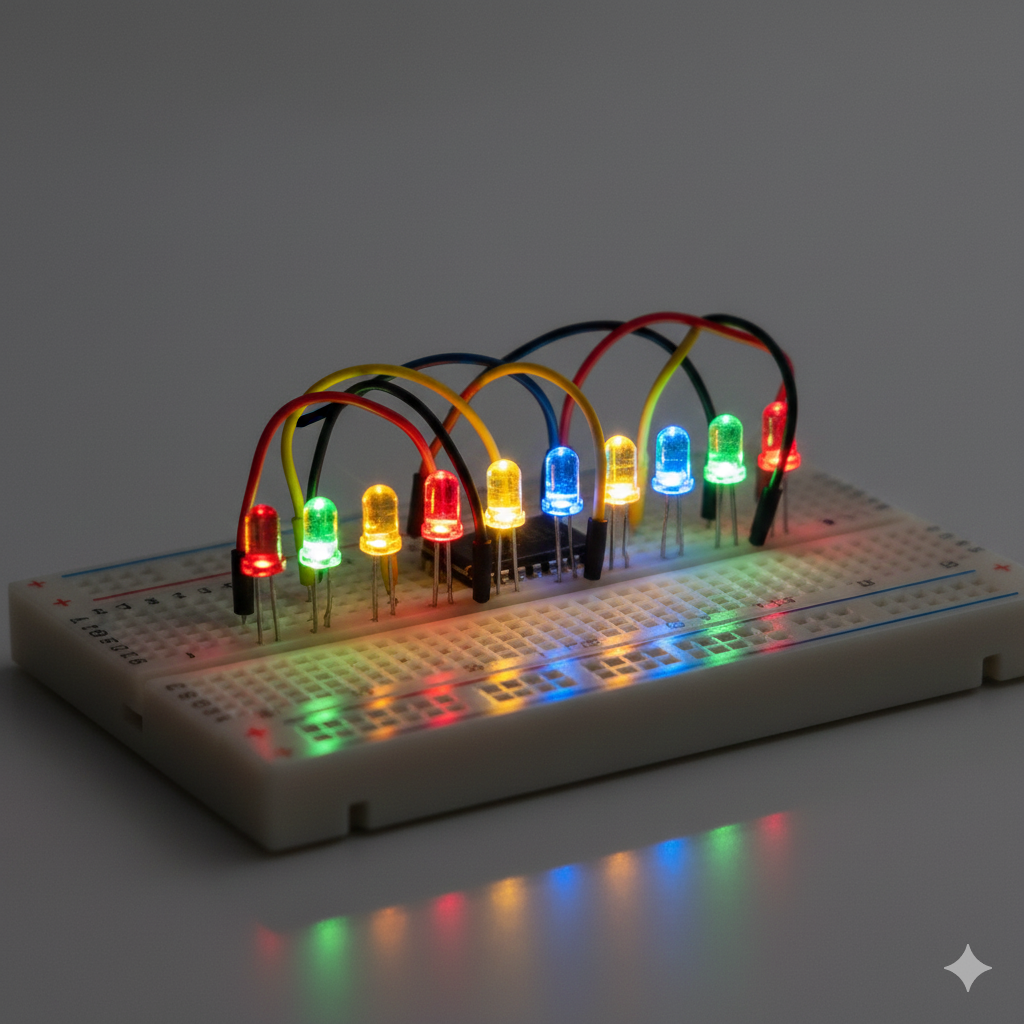
Self Balancing Robot

Dancing LED

Dancing LEDs

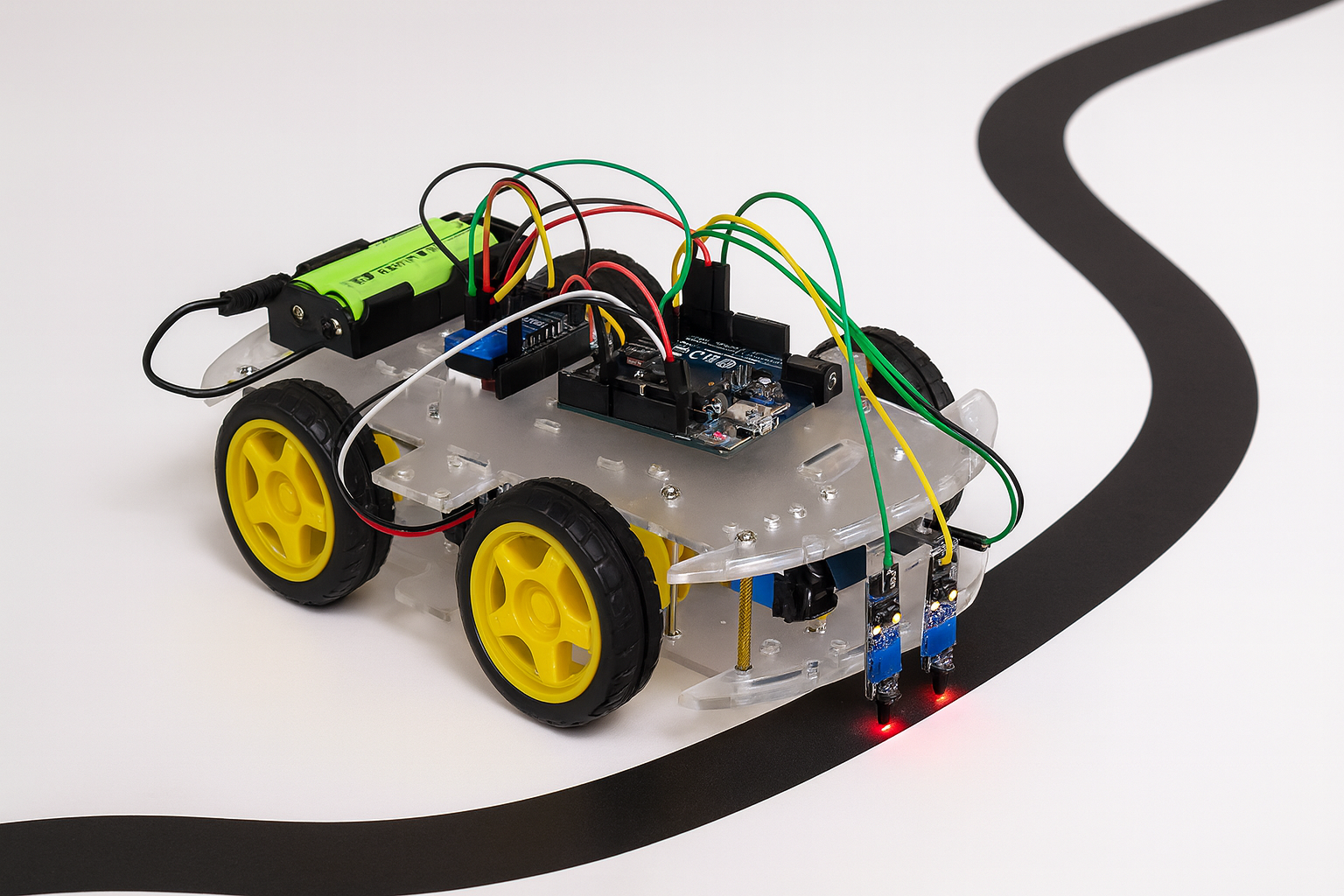
Line Follower

Line Follower Robot

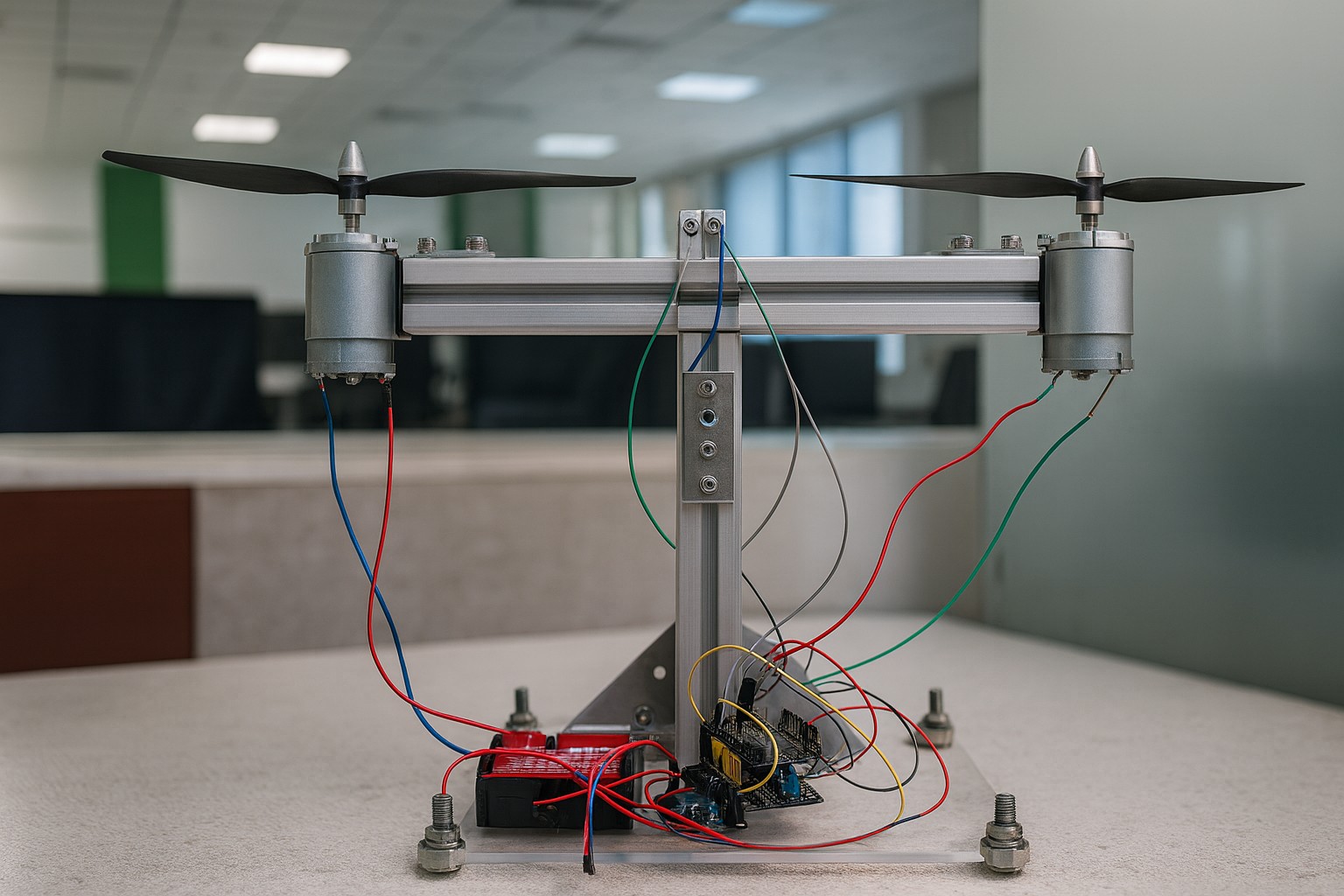
Pitch Perfect PID Controller

Pitch Perfect-PID Controller

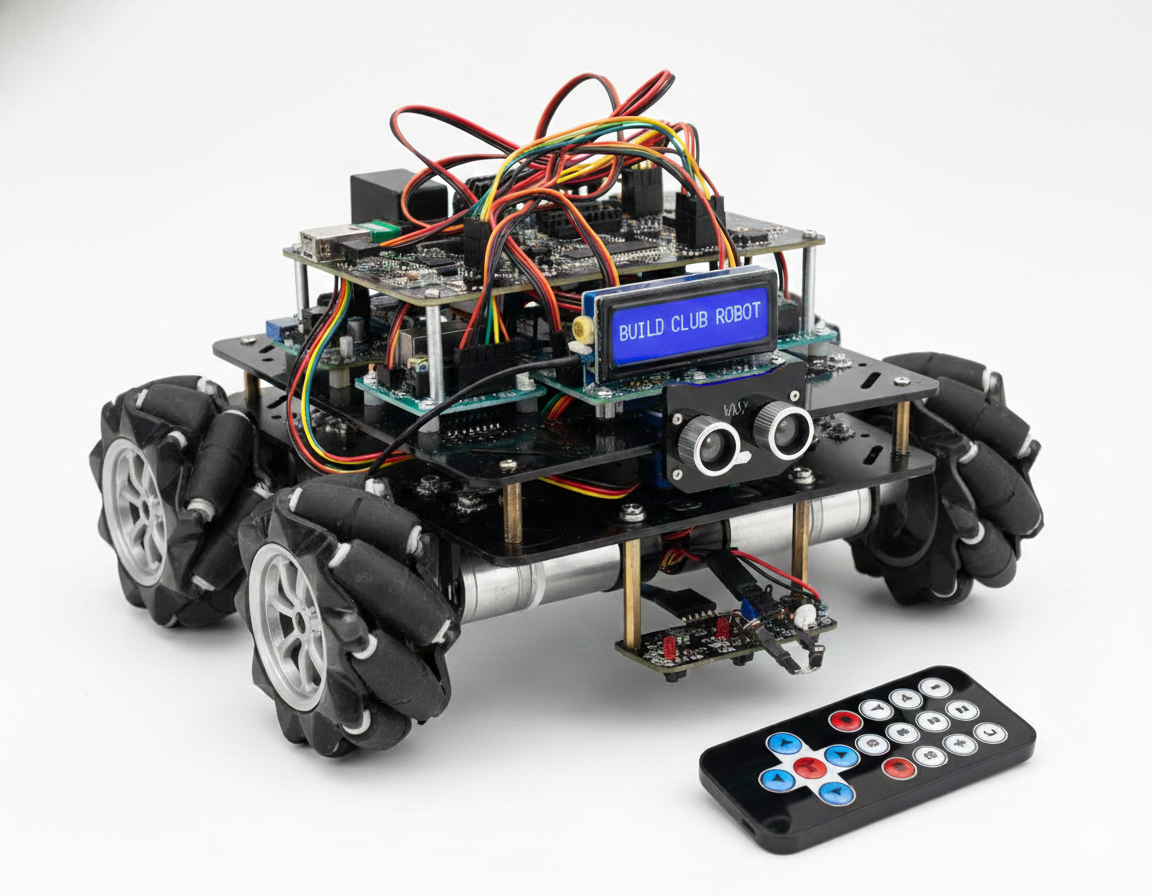
Mecanum Wheel Robot

Mecanum Wheeled Robot

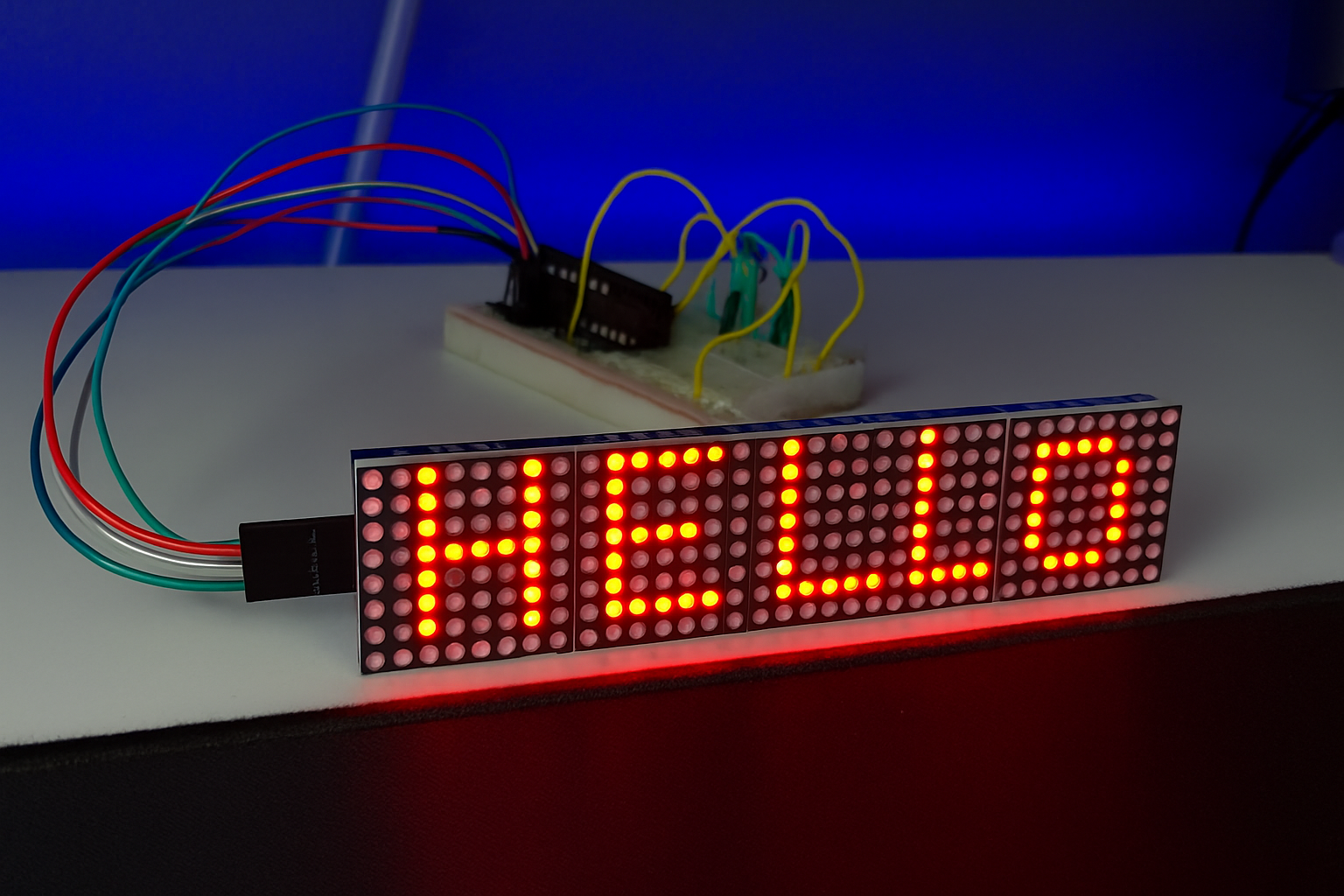
Rolling Display
Rolling Display

Autonomous Maze Robot

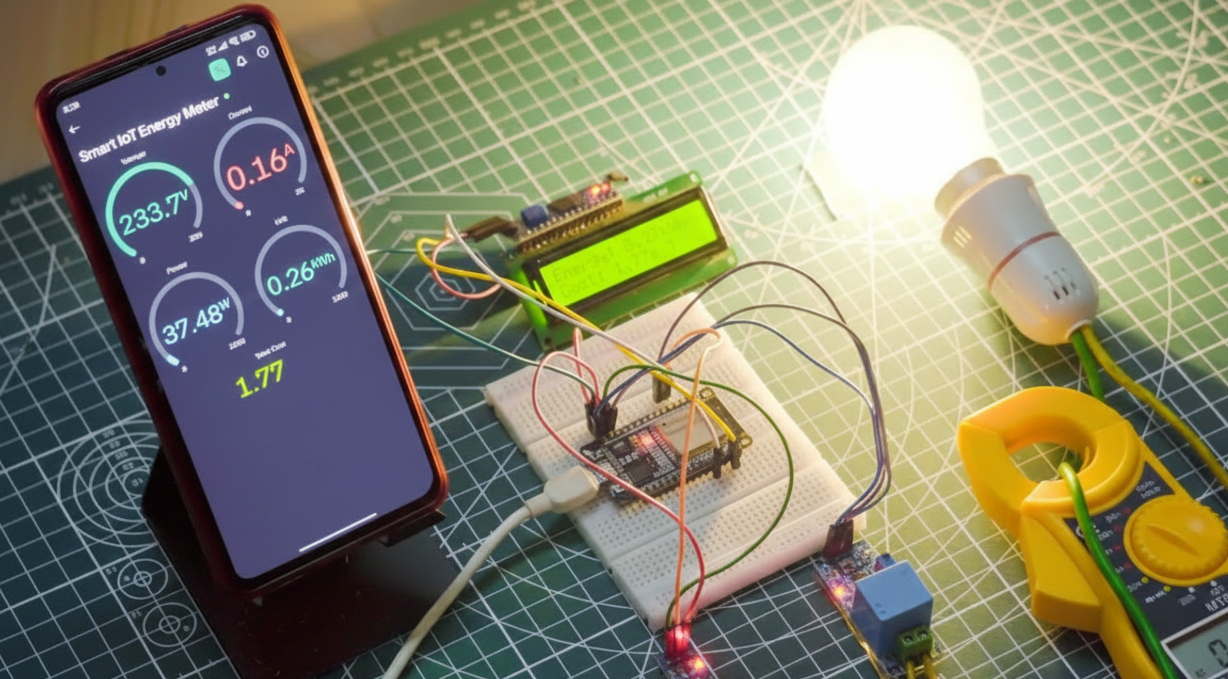
IOT Energy Meter

Part 2: Building Robots

After students carry out their simple build projects and gain hands-on confidence, they progress to a deeper and more intuitive exploration of robotics. Building Robots follows a "Learn and Build" approach.

The learning phase is done using a tabletop planar robot and follows a well-structured learning path:

Concept Videos: Clear, engaging lectures introduce the foundations of robotics—mathematics, robot kinematics, control systems, and programming.

Concept Challenges: Each module includes fun problem-solving challenges that test understanding. One popular challenge involves using a robot-mounted striker to pocket a carrom coin. Students calculate the required joint angles, force, and trajectory—bringing core robotics principles to life. This builds up to an exciting carrom tournament where students compete, collaborate, and learn together.

This learning experience typically spans 40 plus hours, giving students the time and depth needed to develop strong conceptual clarity.

In the building phase, students put their learning into practice by designing and building their own robotics projects—applying ideas from kinematics, control, and embedded systems to real builds.

The Building Robots program is offered in collaboration with Ab6 Robotics Pvt. Ltd., IIT Gandhinagar, ensuring high-quality instruction and expert guidance throughout the journey.

Part 3: Moving on to Build more complex stuff

1. Building Integrated Circuit (in near future)

The world is currently experiencing an extraordinary demand for Integrated Circuit (IC) Design Professionals. India's youth have the potential to contribute to this. ITEL aims to bridge this gap by developing a pathway for students to learn IC design.

Just like the robotics track, students follow a structured and hands-on learning pathway to understand and build Integrated Circuits (ICs) from the ground up. They learn the fundamental concepts of chip design and apply them using open-source electronic design automation tools—gaining exposure to a workflow used in real semiconductor environments.

They design their own ICs and are provided with support to get the IC fabricated at the Semiconductor Laboratory (SCL), Chandigarh. Once fabricated, the semiconductor components are returned to the students, enabling them to use their own chips in various build projects. This end-to-end process gives them a rare opportunity to see their design come to life in silicon.

The primary goal of this initiative is to nurture a chip-design culture among students and build a strong talent pipeline for India's growing semiconductor ecosystem.

This learning module is delivered in collaboration with the Semi-Conductor Laboratory (SCL), Chandigarh, and Vicharak Computers Pvt. Ltd.

2. Virtual Reality (VR) based learning (in future)

These courses offer a distinct learning experience compared to the other Build Club activities. While most learning tracks follow a "learn and build" approach, the Virtual Reality (VR) module focuses on "learn and operate." The goal is to equip students with the essential operational skills required for assembly-line roles in key process industries.

Students train in highly realistic VR environments that simulate real-world industrial workflows. Industry-specific VR modules—such as solar panel manufacturing and semiconductor process operations—are designed to help learners understand machinery, safety practices, and step-by-step procedures with exceptional clarity.

By immersing them in these virtual yet industry-accurate environments, the program builds confidence, improves readiness for process manufacturing roles, and prepares them for opportunities in high-growth sectors.

This initiative is delivered in collaboration with DP2ventures Pvt. Ltd.

Part 4: Beyond the Build Club

Beyond everyday building, the Build Club will also offer specialized courses that deepen students' skills in emerging technologies. These programs lie outside the regular rhythm of the club but are still a key part of what Build Club stands for.

1. Finishing School in Power Electronics: To make one a Designer of Power Electronics

Power Electronics is a highly specialized field, and designing reliable power electronic systems demands deep technical skill, precision, and hands-on experience.

To prepare students for this challenge, ITEL offers a six-month, rigorous and intensive training program in power electronics for fresh graduates and final year students.

Students spend close to 60 hours every week working directly on real-world power electronics designs—learning to build, test, and refine systems through continuous experimentation. To enable full-time commitment, students receive a stipend during the course, ensuring they can dedicate themselves completely to learning. By the end of the program, graduates are equipped with the depth of knowledge and hands-on capability needed to step confidently into careers in power electronics design and will be placed in a start-up / industry to carry out design.

This course is developed by the Power Electronics Consortium of India with faculty members from prominent institutes across India.

2. Finishing School in Product Design: To make one a Product Designer

India faces a significant shortage of skilled product designers, and many young graduates struggle to meet the demands of this rapidly evolving field. To address this gap, ITEL offers a six-month intensive paid course in product design for fresh graduates or final year students. This program is built on a simple philosophy: the best way to learn product design is by actually designing products.

Lectures are intentionally kept limited to about two hours a day. The rest of the time is dedicated entirely to building, experimenting, and developing products from scratch. Students spend nearly 60 hours each week designing and developing 6-8 products mainly in electro-mechanical disciplines. This course also entails supplementary learning about Market Analysis, Design Thinking, and more.

By the end of the course, participants are fully prepared for careers in product design and development, with a strong portfolio and real, demonstrable skills. Additionally, students aspiring to be young entrepreneurs in the world of Product Design will be encouraged and nurtured. This is a high-profile, high-rigor program created for students who are ready to put in the work and grow into world-class product designers.

This course will soon be hosted at IIIT Delhi and IIIT Hyderabad, with the cohort size limited to 20-30 students.

Workshop Gallery

Glimpses from Build Club workshops across India

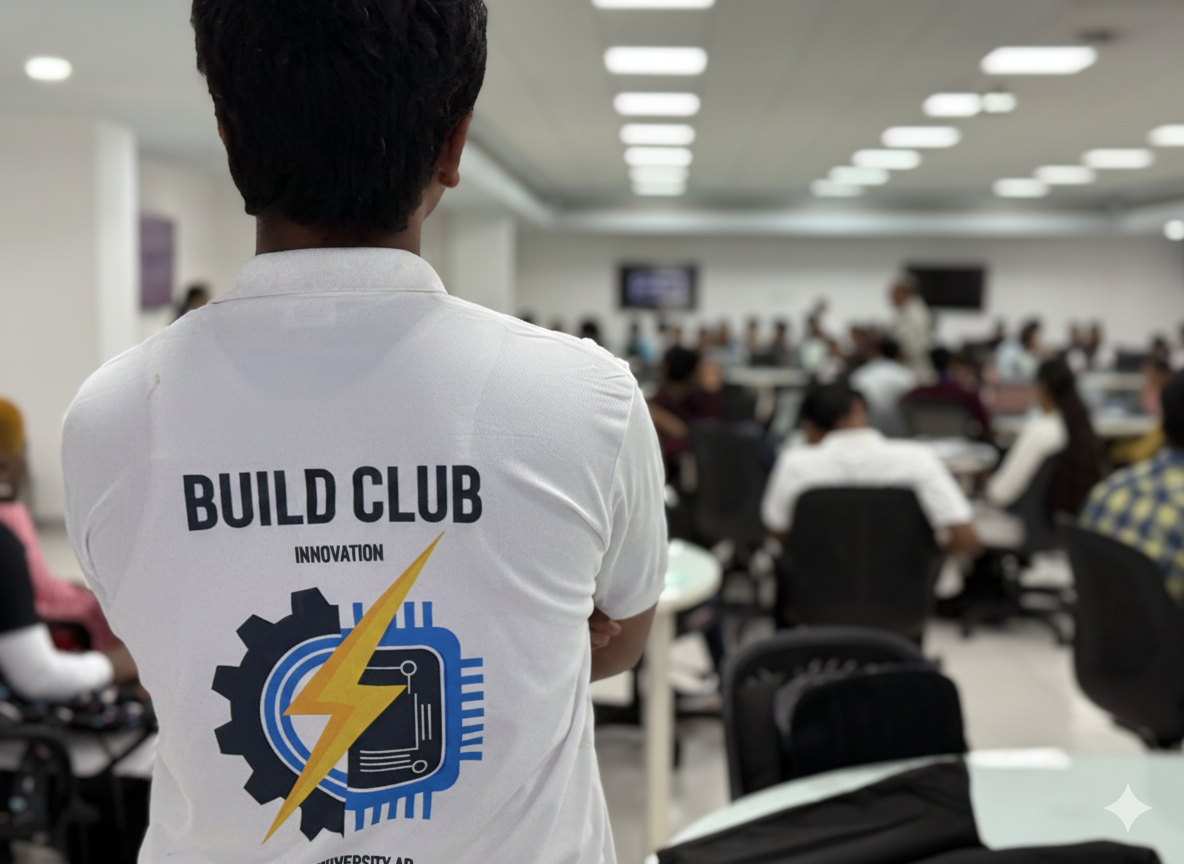
Build Club Workshop 1
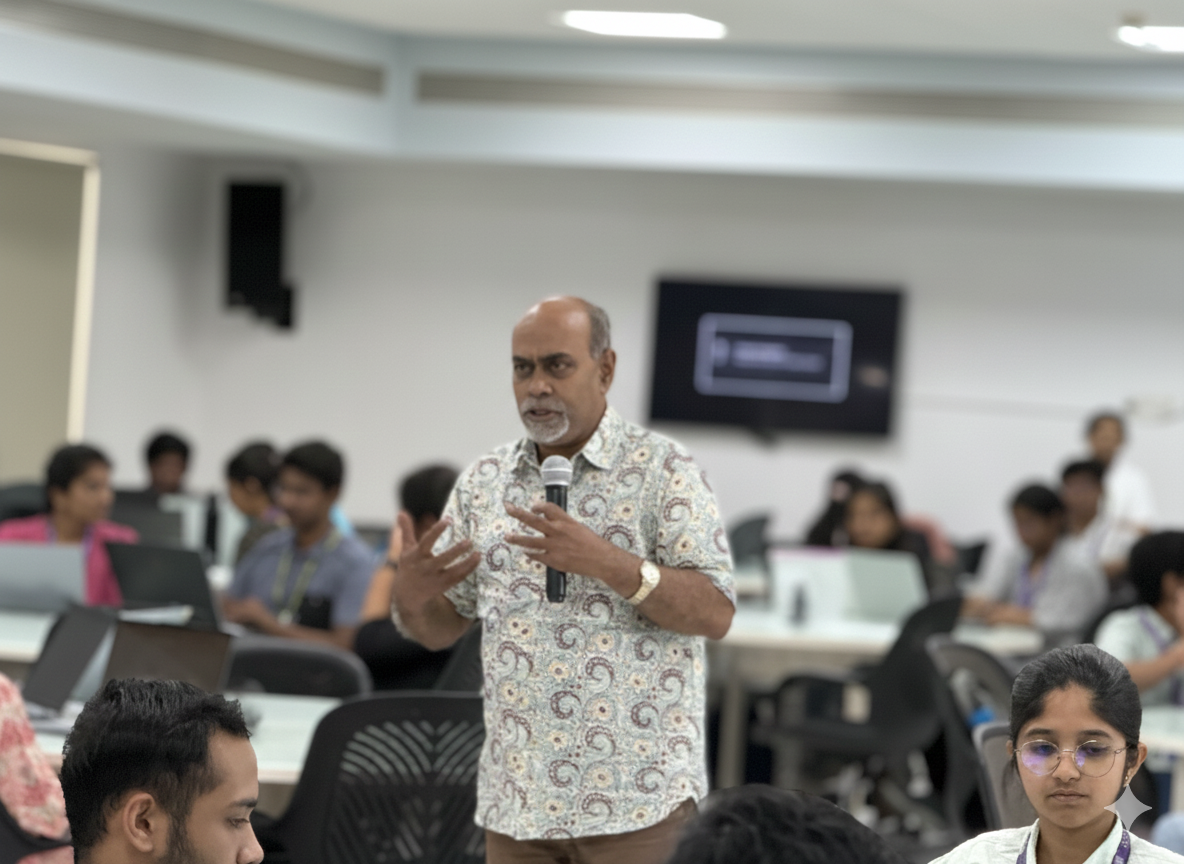
Build Club Workshop 2
Build Club Workshop 3
Build Club Workshop 4
Build Club Workshop 5
Build Club Workshop 6

The Way Forward

In the next two years, ITEL aims to establish Build Clubs in More than 100 colleges through partners across India. Currently Builds clubs are established in East and Northeast through IIM Calcutta Innovation Park – Technology & Innovation Council. Premier institutions such as IIIT Delhi and IIIT Hyderabad will play a significant role in the establishment of Build Clubs in their regions.

As Build Clubs mature on campuses, a stronger building culture naturally begins to form. Over time, students who gain confidence through hands-on projects can start collaborating with faculty to address local industry challenges. This gradual progression sets the foundation for meaningful industry–academia collaboration to emerge.

Join the Movement

Passionate educator wanting to setup Build Club at your campus?

Organization looking to support the next generation of innovators?

Let's connect and make it happen

connect@itelfoundation.in